 JINYUNLifting Equipment
Talk to sales+86 185 6021 2362
Get a Quote
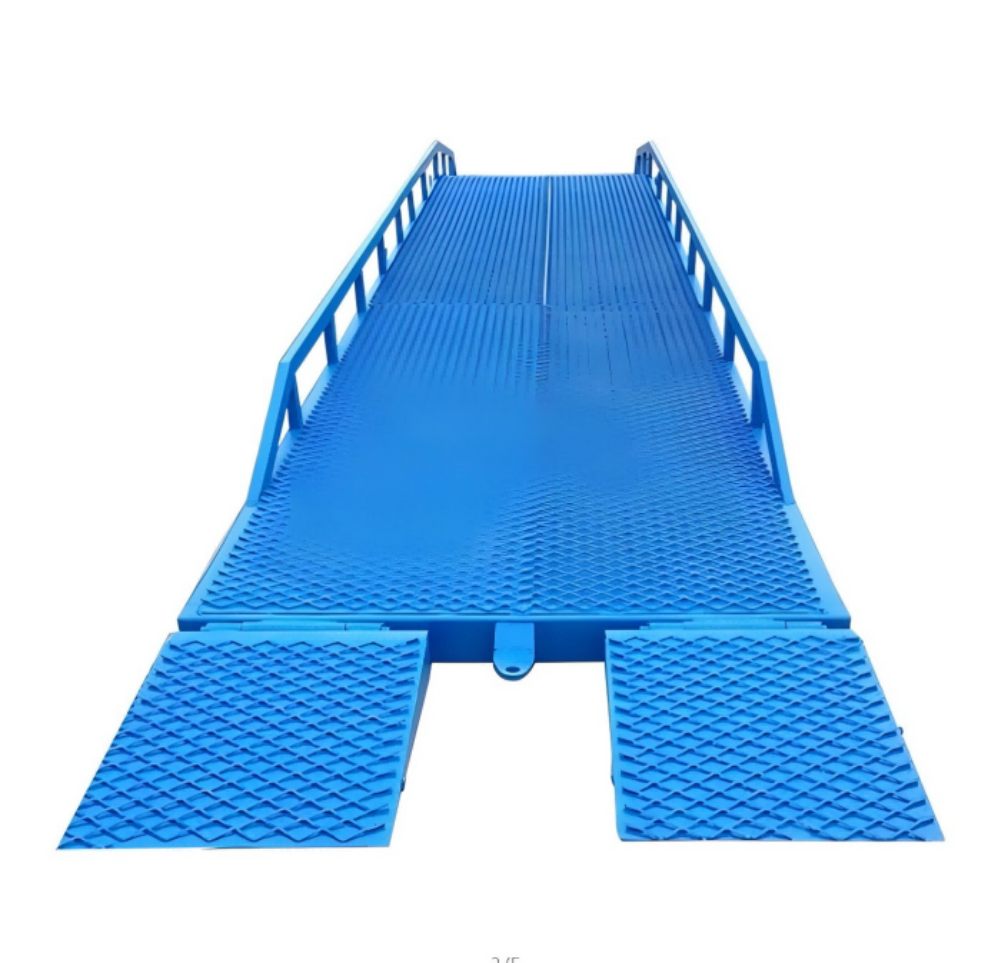
Mobile hydraulic ramps and fixed dock levelers that let a forklift move straight from the ground into a trailer or container — without pouring a concrete dock or waiting for a loading bay.
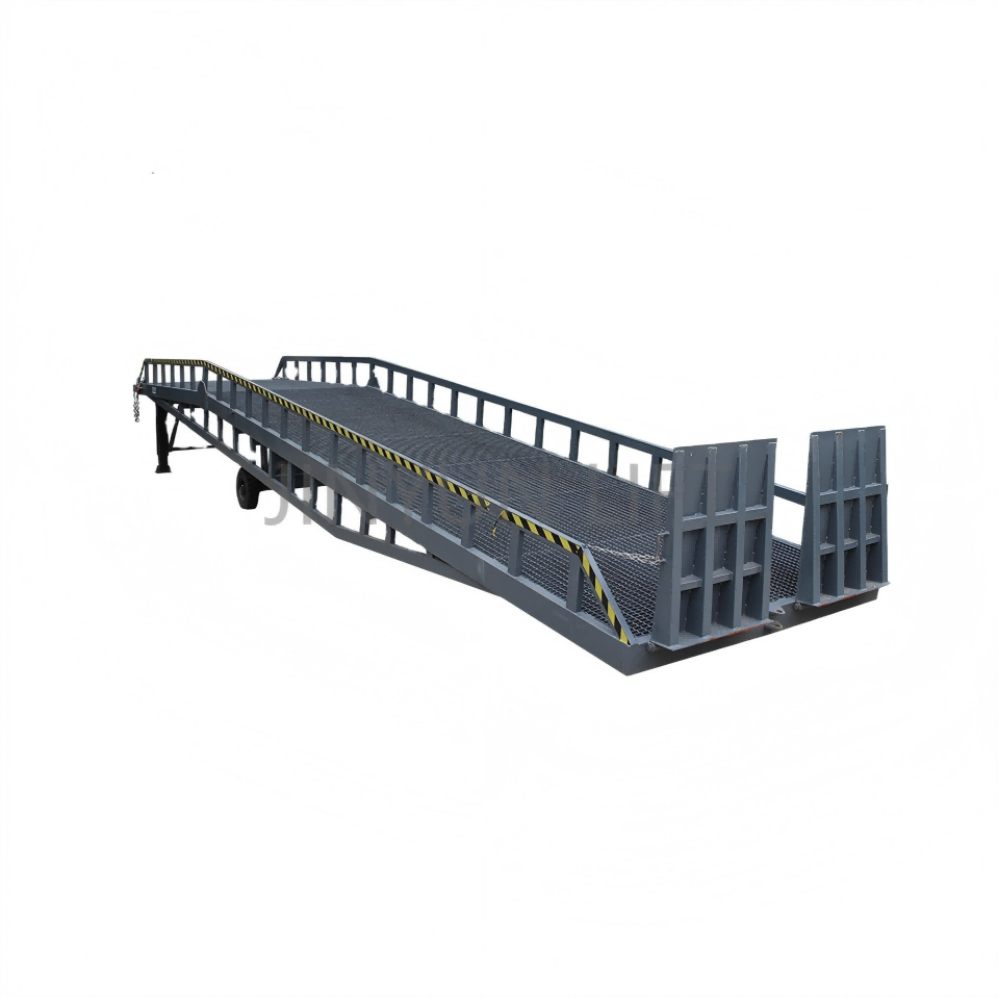
A mobile yard ramp is a sloped steel bridge on wheels. Position it at the trailer tailgate, pump the hydraulic legs until the lip sits at bed height, and a forklift can drive in with a full pallet. When the truck leaves, the ramp moves to the next one.
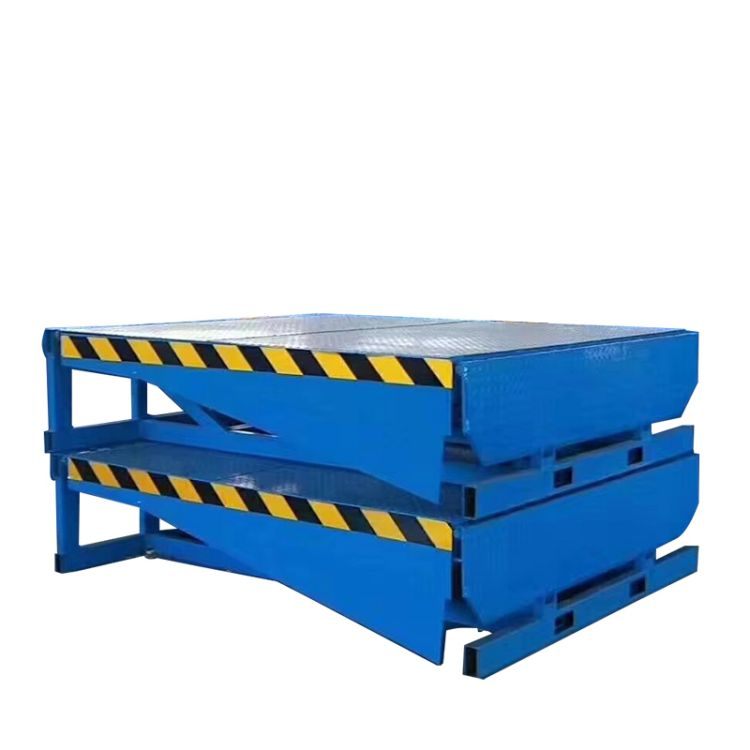
For sites that do have a concrete dock, a fixed leveler closes the height gap between the dock edge and the trailer bed, with an extendable lip that reaches into the trailer.
Ramp length is chosen from the trailer height and the forklift's ground clearance — a steeper ramp is shorter but harder to climb loaded.
| Types | Mobile yard ramp · container ramp · fixed dock leveler |
|---|---|
| Capacity | 6 – 15 t (12 t and 15 t are standard for container work) |
| Ramp length | 7 – 11 m, including a 2–3 m level platform |
| Width | 2.0 – 2.2 m, or matched to your forklift |
| Service height | 1.1 – 1.8 m adjustable |
| Deck | 8–10 mm checkered plate, anti-skid, with side curbs |
| Lip | Fixed or extendable, up to 400 mm reach |
| Operation | Manual hydraulic pump standard; electric pump optional |
| Mobility | Solid tyres with brake, tow bar, forklift relocation points |
| Finish | Powder-coated blue, yellow or RAL colour of your choice |
| Lead time | 15 – 25 days after order confirmation |
| Minimum order | 1 set for levelers; 5 sets for the standard container ramp listing |
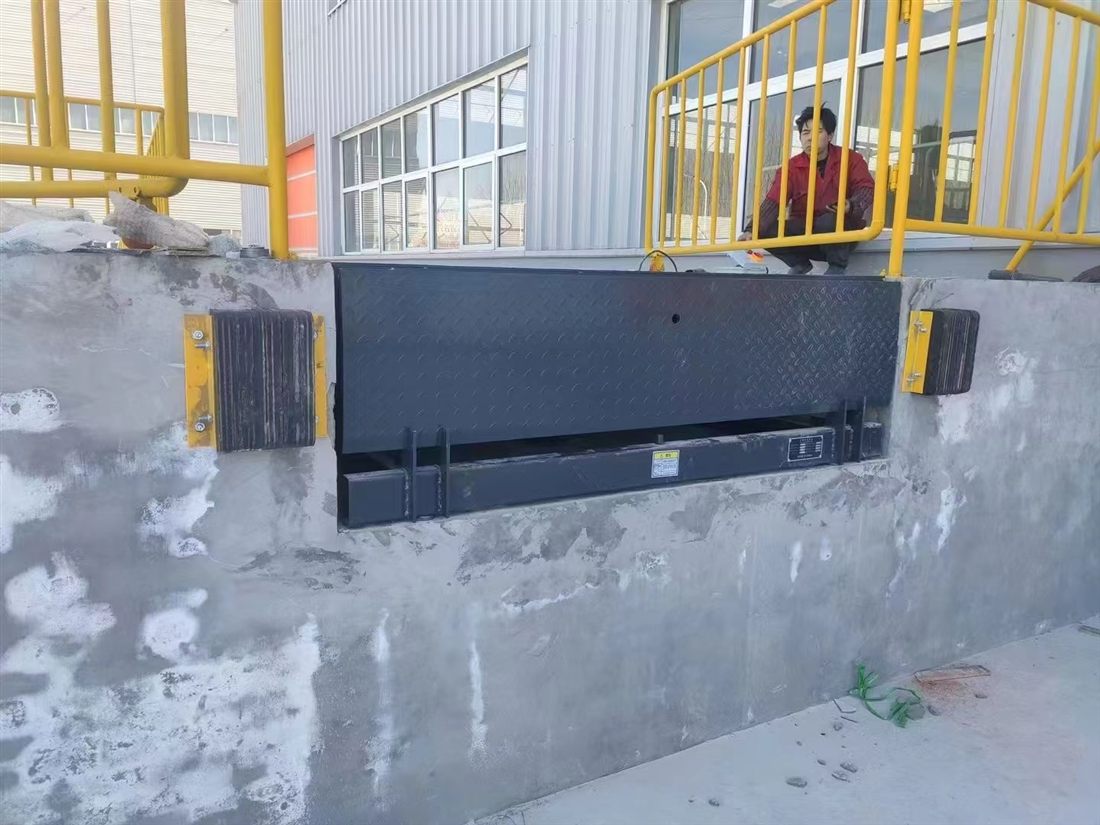
Deck colour, lip type and wheel configuration confirmed per order.
Standard containers sit around 1.2–1.5 m; flatbeds and local trucks vary. We match the ramp's adjustable range to your fleet.
Loaded forklift plus pallet, not the forklift alone. This is the number the ramp's capacity has to cover.
Concrete is fine; on gravel or uneven yard surfaces we recommend a wider wheelbase and support legs.
Several trailers a day usually justifies a fixed leveler; occasional container work favours a mobile ramp.
Unloading 20 ft and 40 ft containers where no dock exists.
Short ramps at the tailgate, kept clear of ice and standing water.
Loading finished goods from a flat apron onto flatbed trucks.
Fixed levelers at existing bays to stop forklifts bridging on pallets.
Trailer type, forklift weight and yard surface are enough for us to recommend a length, a capacity and a price.